
Parkinson’s: It’s Not the Tremors You Need to Worry About
When people hear “Parkinson’s,” they usually think of shaking hands. Unsteady steps. Stiff movements. The things you can see.

And those are real. They’re hard to miss.
But here’s what a lot of people don’t realize: for many Parkinson’s patients, the thing that actually puts them at greatest risk isn’t the tremors.
It’s something quieter. Something that doesn’t show up on the outside.
Swallowing trouble. Dysphagia.
It doesn’t get attention the way a shaky hand does. But it adds up risk, day after day.
A bite of food. A sip of water. In a split second, they can go down the wrong pipe—into the airway instead of the stomach.
And then you’ve got a choking emergency on your hands.
What makes it even harder is that when that happens, the standard first aid most of us learn—like the Heimlich maneuver—doesn’t always work.
Parkinson’s changes how muscles move and coordinate. So the body doesn’t always respond the way it should.
And that leaves families feeling helpless at the worst possible moment.
Knowing about the disease matters, of course. But being prepared? That might matter even more.
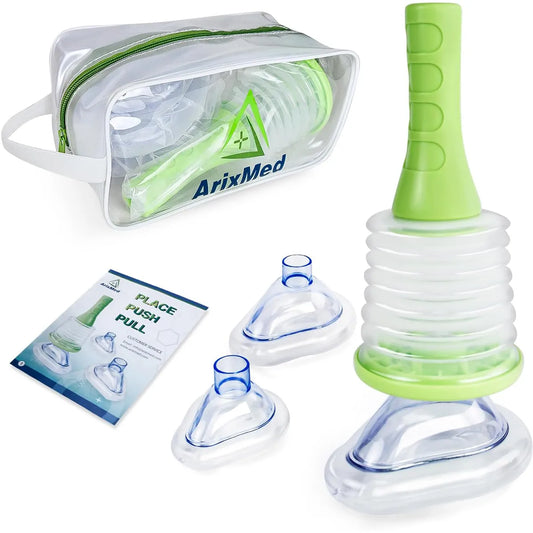
ArixMed Airway Clearance Device was built for situations like this.
Not as a replacement for the Heimlich, but as an extra layer of protection when seconds count.
The story below is a real one. It happened to Linda, a 67-year-old woman living with Parkinson’s.
What she went through shows what’s at stake—and how having the right tool on hand can change the outcome.
A Real-Life Story: Linda’s Experience
Linda was 67. She’d been living with Parkinson’s for years, and like a lot of people with the condition, she had trouble swallowing.
One day, at home, she was eating a meat patty. A piece got stuck.
Not in her throat the way it should’ve—it went into her airway. Within moments, she couldn’t breathe.
Her family jumped in. They tried the Heimlich. They tried back blows. The things you’re supposed to do.
The things everyone hopes they’ll never actually have to use. But this time, they didn’t work. Linda was still choking.
Time was running out.

When the Usual Methods Weren’t Enough
Her family did everything right. They acted fast. But because of Linda’s dysphagia and the way Parkinson’s had affected her muscles, the standard techniques couldn’t clear the blockage.
How ArixMed Choking Rescue Device Helped
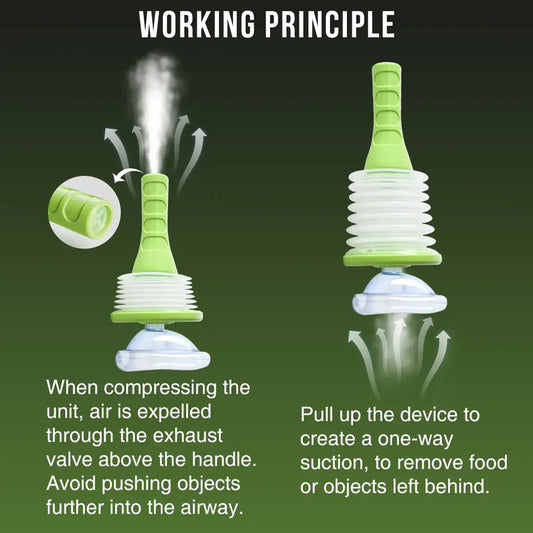
That’s when someone grabbed the ArixMed device. Within moments, it suctioned the food out. Linda could breathe again.
What could have turned into a tragedy didn’t—because her family had a tool designed for exactly this kind of emergency.
Why Dysphagia Is Such a Big Deal
People call dysphagia a silent crisis, and that’s really what it is.
When swallowing doesn’t work right, food and liquids can easily go where they shouldn’t.
It doesn’t always cause an immediate problem. But it increases the risk of choking, and when a full blockage happens, the clock starts ticking.
If you can’t clear the airway fast enough, the consequences are serious.
Not just the immediate danger—but also things like aspiration pneumonia down the road.
ArixMed: A Tool That Can Make a Difference in an Emergency
Why It Works Well for People with Dysphagia
ArixMed uses gentle suction to pull out whatever’s blocking the airway. You don’t need strength.
You don’t need to position it perfectly. That makes it a good fit for people with dysphagia—and for the family members or caregivers trying to help in a moment of panic.
Simple to Use, Fast to Act
You don’t need medical training. In an emergency, anyone can pick it up and use it.
Traditional methods like the Heimlich are important, but they don’t always work in every situation.
Having ArixMed gives families another option—one that can be a real lifeline when the usual steps fall short.

It’s made for home use, but it works just as well in care facilities.
Anywhere someone with swallowing difficulties spends time, having ArixMed Anti-Choking Device nearby means being better prepared.
How to Lower the Risk of Choking for People with Dysphagia
Make Mealtimes Safer
- If someone has trouble swallowing, it helps to avoid foods that are big, tough, or hard to chew.
- Soft foods are easier. In some cases, texture-modified meals can also make a difference.
Be Ready Before Something Happens
Learning basic choking first aid is important. But being truly prepared means having the right tools on hand too.
Skills plus equipment give you the best shot at responding quickly when it matters most.
Keep an Eye on Swallowing Over Time
Regular check-ins with a doctor or a speech therapist can help track how swallowing is changing.
Sometimes early help—like swallowing exercises or dietary changes—can prevent emergencies before they start.

Protecting the People You Love
Linda’s story shows something important. Parkinson’s doesn’t just affect movement.
It affects everyday things most of us don’t think twice about—like eating.
And when something goes wrong, it can go wrong fast.
Her family’s quick thinking made a difference. But having ArixMed on hand made it possible.
No family should have to face a choking emergency without the right tools.
Whether at home or in a care setting, being prepared means having more than hope. It means having a plan.
And the tools to carry it out.
For families living with dysphagia, ArixMed offers something simple but real: peace of mind.
And that might be the most important thing you can give the people you love.
Be Prepared for the Unexpected
Buy Now & Protect Your Family