
How a First Aid Training Provider in Brazil Is Rethinking Choking Response in Schools
In recent years, choking emergencies have been getting more attention—especially in places like schools and care facilities.
In Brazil, that shift is becoming more noticeable. Not just in training sessions, but in how schools actually document and prepare for these situations.
We recently spoke with a local first aid training provider who shared how their approach is starting to change.

What really happens in schools
Most choking incidents in schools happen during meal times. That’s when things can go wrong quickly—and when staff are expected to respond just as quickly.
On paper, the steps are clear: back blows, then abdominal thrusts.
But in reality, it doesn’t always play out that smoothly.
“Even trained staff can hesitate,” one trainer told us.
“And hesitation, even for a few seconds, matters.”
There’s data that helps put this into perspective.
Globally, choking remains a significant safety concern, accounting for over 100,000 deaths each year. Children—especially those under the age of five—are among the most vulnerable.
Studies also suggest that a large proportion of choking-related deaths, around 60–80%, are associated with food, which makes everyday environments like schools particularly relevant.
While many incidents occur at home, the data highlights a broader reality: choking is not limited to any single setting, and preparedness matters wherever children are present.

Situations aren’t always ideal
There are also scenarios where standard techniques are simply harder to apply.
Think about:
- a young child panicking and resisting
- someone seated and difficult to reposition
- or a situation where only one adult is present
These aren’t rare edge cases. They happen more often than people expect.
A shift, not a replacement
Because of this, some training providers are starting to adjust how they teach and recommend response strategies.
Not by replacing traditional methods—but by adding another layer.
Brazil’s Lei Lucas (Law No. 13,722/2018) already requires schools and daycare centers to train staff in first aid. That requirement has pushed many institutions to think more seriously about what “being prepared” actually means.
And for some, that now includes discussing backup options.
Where devices come into the conversation
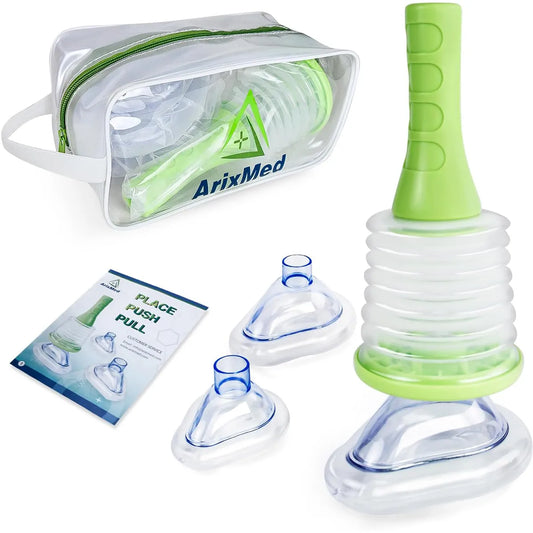
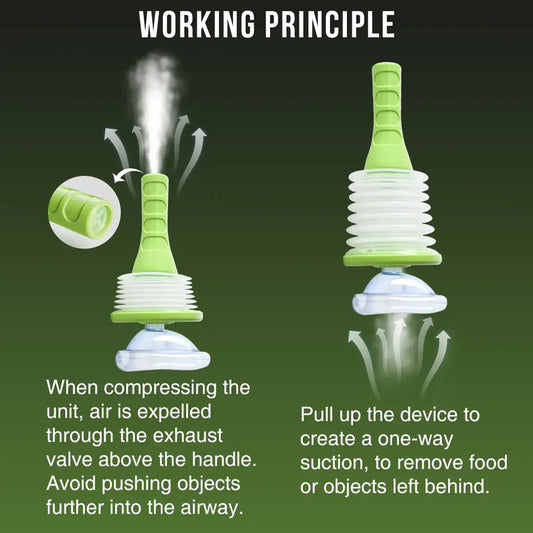
The ArixMed Suction-based Choking Rescue Devices are one example.
They’re not introduced as the first step. And not as a substitute.
Instead, they come up in a very practical context:
What if standard methods don’t work?
What if they can’t be performed effectively?
In those cases, having something simple—something that doesn’t rely as much on strength or positioning—can make a difference.

From training rooms to written manuals
One interesting change is where these ideas are showing up.
According to the provider, some schools are starting to reflect this thinking in their internal emergency manuals—not just in training sessions.
That means clearer step-by-step instructions, but also, in some cases, mentioning additional tools that may be used if needed.
It’s a small shift, but an important one.

Where ArixMed fits in
Within this broader change, solutions like the ArixMed Choking Rescue Device are being looked at as part of a more flexible response setup.
The appeal is straightforward:
- simple to use
- minimal physical effort
- adaptable across different age groups
For schools and care environments, that kind of practicality matters.
A different way of thinking about preparedness
What’s happening here is not just about adding a device.
It’s a shift in mindset.
Instead of relying on a single method, more organizations are starting to think in terms of systems:
training + procedures + tools.
Because in real situations, things don’t always go by the book.
Final thought
Choking emergencies are unpredictable.
And while no single solution fits every situation, being better prepared usually comes down to one thing:
Not just knowing what to do—but having realistic options when things don’t go as expected.
For those involved in school safety, training programs, or emergency preparedness solutions, this shift is already starting to shape how systems are being built.