
Choking Emergencies: Why People Freeze and What Actually Helps
Choking emergencies rarely start the way people imagine. No dramatic music. No slow motion. Just a regular moment — dinner at home, lunch at a desk, a barbecue with friends. Everyone's talking, eating, laughing. Then someone takes a bite. And something feels off. At first, nobody notices. Maybe they cough once. Clear their throat. Or they just go quiet, sitting there, trying to breathe. It can take a few seconds before anyone realizes: wait, this is serious. Those few seconds? They matter more than most people think.
Why People Don’t Notice Right Away
Movies often show someone grabbing their throat and collapsing. Real life isn’t like that.
In actual homes and restaurants, choking can begin with very subtle signs — a weird cough, a sudden look, or someone quietly standing up from the table. Kids and older adults are harder to spot. They may not be able to clearly say what’s wrong. A nursing home aide once told me how eerie these moments can feel. The room stays noisy — forks clinking, people chatting — while one person silently struggles to breathe.

Certain Foods Are Riskier Than You Think
Doctors track similar foods over and over:
- • Dense or slippery foods
- • Meat not chewed properly
- • Hot dogs, grapes, nuts, hard candy

For older adults, it’s even trickier.
Aging weakens swallowing muscles. Medications, dental issues, or neurological conditions like Parkinson’s or stroke can all make eating riskier. Caregivers often encourage smaller bites and slower eating. But even when precautions are taken, emergencies can still happen.
The Real Challenge: Freezing
The hardest part isn’t always the technique. It’s the moment right before. Almost everyone knows the Heimlich maneuver. Few have practiced it. In that moment — heart pounding, someone’s life on the line — details blur. Where do my hands go? How hard should I push? What if I hurt them? What if I do it wrong? Sometimes it’s hard to even tell if the person is choking or just coughing. Sometimes their situation makes it physically difficult — they’re in a wheelchair, larger than the rescuer, or pregnant. That hesitation? That’s what costs precious seconds.
Why Some People Keep a Device Nearby
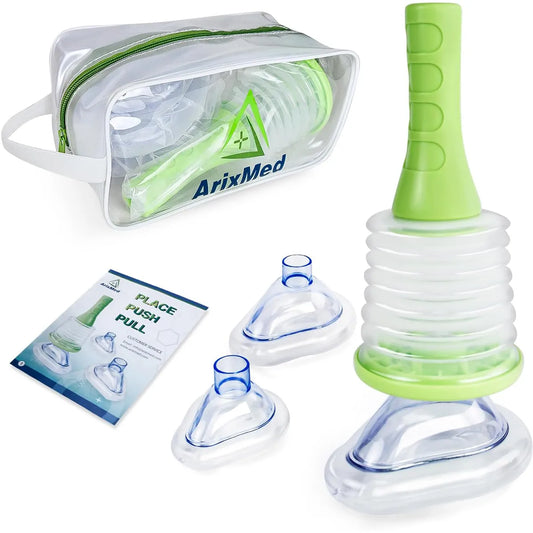
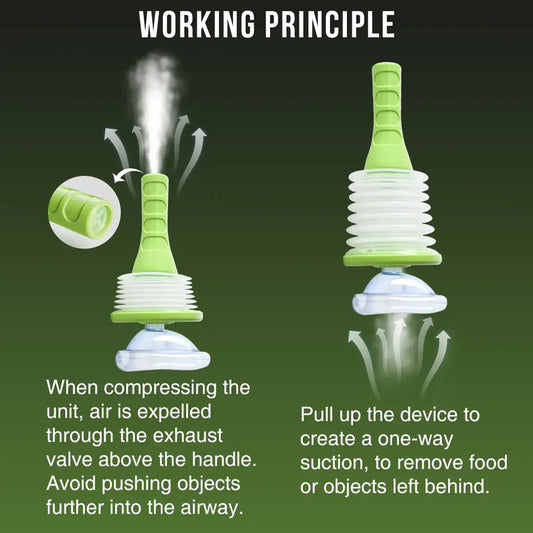
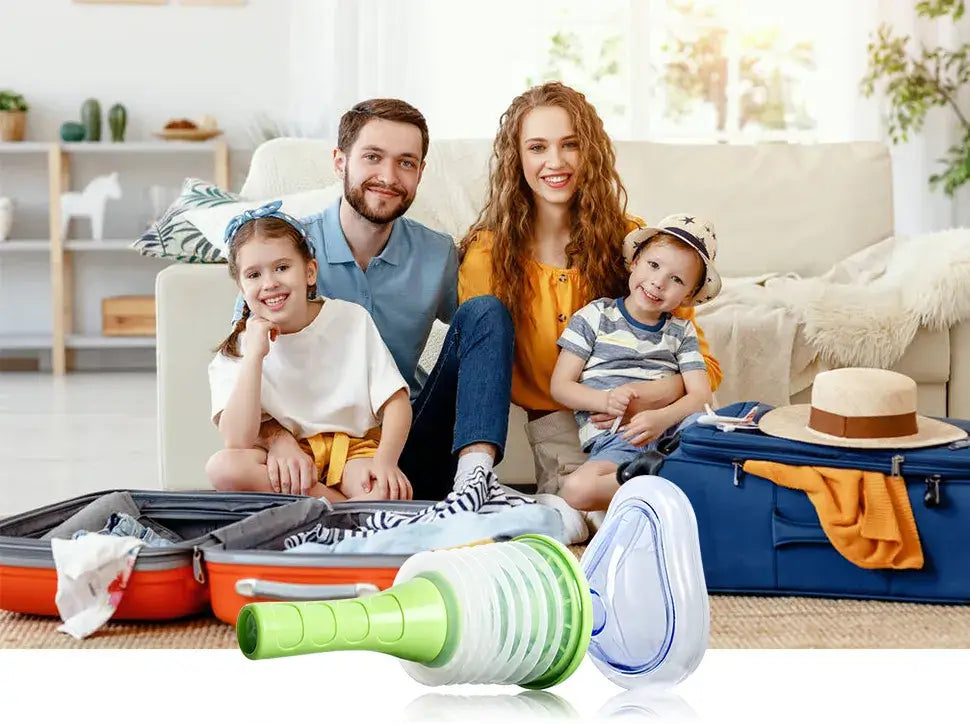
Because choking can happen anywhere, some families keep a simple rescue device handy. The ArixMed Anti-Choking Device works by creating suction through a mask placed over the mouth and nose, helping remove an obstruction. No complicated moves. No guessing about hand placement. Quick to grab when seconds matter.

It’s not a replacement for first aid training, but many see it as an extra layer of protection — a tool to use when time is critical.
A Normal Moment Can Change in Seconds
Choking can strike during everyday life: a Tuesday dinner, a child’s school lunch, a quiet night at home. Nobody expects something so ordinary to suddenly become dangerous. Choking emergencies don’t come with warnings. They happen in the middle of everyday moments — while people are eating, talking, and enjoying their time together.
That’s why preparation matters. Recognizing the signs, acting quickly, and having the right tools nearby can turn a frightening moment into a manageable one. Because when someone can’t breathe, seconds matter. And sometimes, being ready is what gives those seconds a chance to count.