
Choking Rescue Device vs Heimlich Maneuver: Do You Still Need a Device If You Know First Aid?
Knowing the Heimlich maneuver is essential, but it doesn't eliminate the need for a backup device. Manual abdominal thrusts can fail when the victim is unconscious, pregnant, very young, elderly, or alone—and physical limitations or panic can reduce effectiveness. A suction-based choking rescue device offers a non-invasive backup when standard maneuvers are unsuccessful or cannot be performed, giving families and caregivers an additional layer of protection.
How Does the Heimlich Maneuver Work?
The Heimlich maneuver, also called abdominal thrusts, uses quick upward pressure below the ribcage to force air from the lungs and dislodge an obstruction. It has saved countless lives since Dr. Henry Heimlich introduced it in 1974 and remains the first-line response taught in CPR and first-aid courses worldwide.
The technique requires the rescuer to stand behind the victim, form a fist above the navel, and deliver five sharp inward-and-upward thrusts. When performed correctly on a conscious, cooperative adult, it can quickly clear a blocked airway.

Where Manual First Aid Falls Short
Despite its effectiveness, the Heimlich maneuver has well-documented limitations:
- When the victim is alone: You cannot perform abdominal thrusts on yourself with reliable force. Self-administered attempts using a chair back or countertop often lack the necessary pressure.
- Unconscious victims: Once a choking person loses consciousness, abdominal thrusts become difficult or impossible to deliver effectively, and the protocol shifts to CPR—which addresses cardiac arrest but may not dislodge the object.
- Infants and very young children: Abdominal thrusts are not recommended for infants under one year due to the risk of internal injury. Back blows and chest thrusts are used instead, but these require precise hand placement and controlled force.
- Pregnant or obese individuals: Standard hand positioning may not be feasible, and chest thrusts are recommended—but these are harder to perform and less familiar to most bystanders.
- Elderly or frail victims: Forceful abdominal thrusts can cause rib fractures, internal bleeding, or organ damage, especially in individuals with osteoporosis or other fragile-health conditions.
- Rescuer panic or physical limitations: In a high-stress emergency, even trained individuals may struggle to remember the exact technique, apply adequate force, or maintain composure.
How Suction-Based Choking Devices Work
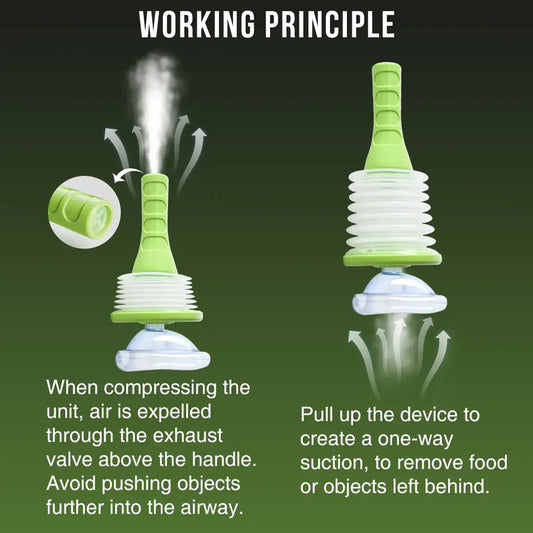
Suction devices use negative pressure rather than force to remove an airway obstruction. The ArixMed® Choking Rescue Device for Kids and Adults employs a manual push-and-pull mechanism that generates negative pressure to help dislodge a suspected airway obstruction. A double one-way and exhaust valve design expels air away from the mask during compression and creates suction during the pull action.
The process is straightforward:
- Place the appropriate-sized mask over the victim's mouth (adult or child mask included).
- Push the plunger down to expel air.
- Pull the plunger up sharply to create suction.
- Repeat if necessary.
Because the device is non-invasive and manually operated, it can be used on individuals of different ages, body types, and physical conditions without the risk of internal injury associated with abdominal thrusts.

When Should You Use a Choking Device?
Choking rescue devices are designed as a backup, not a replacement. The ArixMed device should be used only when standard choking first aid maneuvers are unsuccessful or cannot be performed, and only according to current instructions for use. It does not replace first-aid training, CPR training, emergency medical services, or professional care.
This distinction is critical. The first response to choking should always be the Heimlich maneuver or age-appropriate back blows and chest thrusts. The device becomes invaluable in situations where:
- The victim does not respond to initial attempts.
- The rescuer is physically unable to perform abdominal thrusts.
- The victim is alone and cannot self-administer effective thrusts.
- The victim's condition (pregnancy, frailty, age) makes manual techniques risky.
Real-World Rescues: When Devices Made the Difference
Over 1,000 lives have been saved by ArixMed, with documented cases illustrating the device's role as a critical backup.
On August 3, 2024, Kathryn shared her life-saving experience with the ArixMed Choking Rescue Device after choking on a piece of meat. On January 17, 2025, Corinna Peters' father was saved from choking at a restaurant using ArixMed. On January 22, 2025, a niece choking on a hotdog at a restaurant was saved after three attempts with ArixMed. Maureen used ArixMed to save her son who was choking on jello, cleared with one suction.
These cases share a common thread: the Heimlich maneuver either failed or could not be applied effectively, and the suction device provided an immediate alternative.

ArixMed vs Other Choking Devices: What Sets It Apart?
Several brands offer suction-based choking rescue devices, including Dechoker and LifeVac. While each operates on similar principles, differences in design, usability, and included accessories matter.
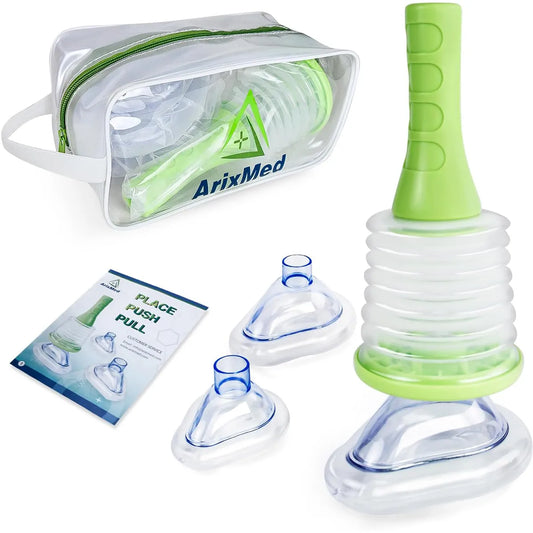
The ArixMed® Choking Rescue Device includes:
- One manual suction device.
- Two adult masks: one for emergency use and one designated for practice.
- One child mask.
- One printed practice manual.
- One clear portable zippered storage bag.
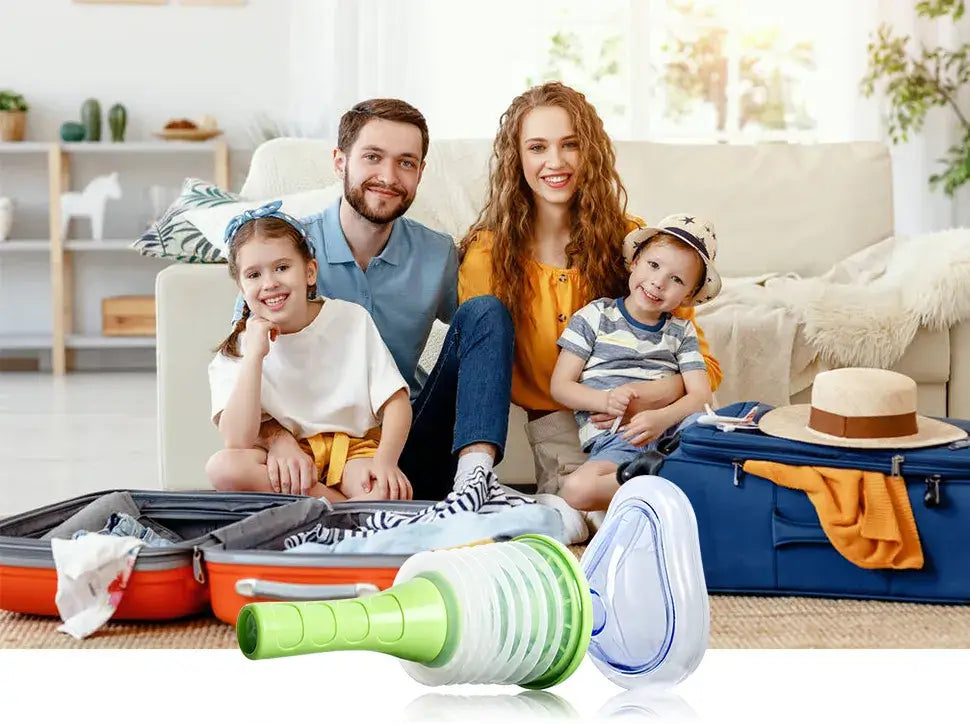
The dual-mask system for adults allows families to rehearse the technique without compromising the sterile emergency mask—a feature that encourages preparedness. The device is reusable, and mask condition should be checked regularly. It fits easily in the supplied storage bag, making it practical for home, travel, school, restaurant, senior-care, or first-aid storage.
"ArixMed is a great device that every household—and everywhere—should have," notes a former professor from the Swallow Center at Johns Hopkins Hospital.
Without direct comparison data on other brands, the choice often comes down to packaging, ease of purchase, and confidence in the brand's support. ArixMed offers a 30-day return policy (item must be in the same condition that you received it, unworn or unused, with tags, and in its original packaging), free shipping on all orders, and a standout promise: get a free replacement if you've used ArixMed to save someone.
Who Should Have a Choking Rescue Device?
First-aid training is non-negotiable for parents, teachers, caregivers, and anyone responsible for vulnerable individuals. But training alone doesn't cover every scenario.
A suction device is a practical addition for:
- Parents of young children: Choking is a leading cause of injury and death in children under five. A device provides reassurance during high-risk meals.
- Caregivers of elderly family members: Dysphagia (difficulty swallowing) increases with age, and manual maneuvers may be unsafe.
- Individuals who live alone: Solo adults face the highest risk because self-rescue is nearly impossible.
- Schools, daycares, and senior-care facilities: Staff trained in first aid benefit from having a backup tool that anyone can operate under pressure.
- Restaurants and public spaces: Quick access to a device can mean the difference between a close call and a tragedy.
Combining Knowledge and Tools: The Safest Approach
The question isn't whether you need a device or first-aid training—it's recognizing that both serve different roles in a comprehensive safety plan.
First-aid training equips you with the skills and confidence to respond immediately. A suction device extends your capability when those skills aren't enough. The ArixMed device is stored in a cool, dry place with the masks and instructions together, ready for the moment manual techniques fail.
Orders are processed within one to two business days, and most arrive within three to five days after purchase—so there's no reason to delay building that safety net.

Final Thoughts
The Heimlich maneuver is a proven, essential technique that every adult should know. But emergencies don't always unfold under ideal conditions. Physical limitations, victim characteristics, and high-stress environments can all reduce the effectiveness of manual first aid.
A suction-based choking rescue device complements your training by providing a non-invasive, easy-to-use backup when standard maneuvers are unsuccessful or cannot be performed. With over 1,000 lives saved and a growing body of real-world rescue stories, the case for keeping one on hand is clear.
Stay ready. Save a life.
FAQ
How does ArixMed compare to Dechoker for clearing a choking emergency?
Both ArixMed and Dechoker use suction to dislodge airway obstructions. ArixMed includes two adult masks (one for practice), a child mask, a printed manual, and a storage bag. It also offers free shipping and a free replacement if used to save someone. Without head-to-head testing data, the choice often comes down to packaging, ease of purchase, and brand confidence.
Can I use a choking device instead of learning the Heimlich maneuver?
No. The ArixMed device is designed for use only when standard choking first aid maneuvers are unsuccessful or cannot be performed. It does not replace first-aid training, CPR training, or emergency medical services. Learn the Heimlich maneuver first, and keep a device as backup.
Is a suction device safe for children and elderly people?
Yes. Suction devices are non-invasive and do not apply force to the abdomen or chest, making them safer than abdominal thrusts for frail, elderly, or very young individuals. ArixMed includes a dedicated child mask and is suitable for kids and adults.
How many times can I use the ArixMed device?
The device is reusable. Mask condition should be checked regularly, and the device should be stored in a cool, dry place with the masks and instructions together. If you use it to save someone, ArixMed will send you a free replacement.
Where should I keep a choking rescue device?
Keep it in a location that's easy to access during an emergency: the kitchen, dining area, or a central first-aid kit. The ArixMed device fits in the supplied storage bag and is practical for home, travel, school, restaurant, senior-care, or first-aid storage.
What should I do after using a suction device to clear a choking victim's airway?
Call emergency medical services immediately, even if the obstruction is cleared. The victim should be evaluated by a healthcare professional to check for injury or residual airway issues. Do not delay seeking professional care.